

So, You Want to Be an Indie Bottler?
‘It’s just buying casks and bottling them?’
Well, this is true to an extent. In much the same way that running a restaurant is ‘just buying ingredients and putting them on plates.’
Here is the full rundown of what being an indie bottler entails, for those who have ever wondered.

First, we buy a cask. We don’t usually get to taste it before we buy it. We get a spreadsheet with details such as its place of distillation, litres of pure alcohol, and price, then we decide based upon the very glamorous spreadsheets. And you never know, maybe the cask will be almost empty when it arrives. It’s the risk you must take.
Occasionally, a cask arrives and is brilliant as it is (this is the best feeling in the world!). More often, the work starts once it’s ours. We must understand the spirit in front of us and work out what will make it shine. Which wood will suit it? How much more time does it need? Is it blending stock or single cask material? Does it taste good at cask strength or need reduced?
Often that means pairing the whisky with a different wood to help it develop.
‘This is fruity but a little one-dimensional. Let’s add some richness and nuttiness with an American oak ex-Oloroso cask to balance it out.’
That means buying an empty cask, importing it from Spain, France or wherever, to re-rack the whisky.
Sometimes the whisky is already in the right wood and simply needs longer to mature. Sometimes we will blend the components to make a certain profile we are after. Then we wait, taste again and decide when it’s ready.
An impressive age statement or attractive label won’t fix a whisky we’ve got wrong. Trust us, we’d love it if labels had that ability. Our lives would be much easier. Whisky seems very good at asking for more time.
Eventually, we decide the whisky is ready. Excellent! Now we need glass bottles, labels, corks, capsules. If we bottle it ourselves, there’s equipment to buy and maintain (which is how we do it at Woodrow’s). Some Indies use a bottling contractor, so they organise with them instead. ‘Just put it in a bottle’ is not an accepted production plan.
Then comes the part that still makes us wince: for a bottle sold in the UK, alcohol duty is due before it goes out to the customer. On many of our bottles, that’s around £13–£14 each. We also need packaging that will get the whisky there in one piece, plus someone to deliver it. Air sacs and cardboard boxes may not be romantic, but neither is a customer opening a box of expensive broken glass. So every time you get a sale, more money flies out the window once again.
By this point, we have had thousands of pounds tied up in that one cask for years. Then, when it’s finally ready, we spend more money turning it into bottles and getting those bottles out the door.
Honestly, this requires a really good relationship with cash flow.
But, now that we’ve sold it, we can get paid (in around 30 days time, anyway). Woohoo!
Keeping these costs in mind, we need to price the bottle correctly for the shelf. We need to find a price that works for the customer and for the business. But that modest margin isn’t pure profit, it then has to help keep the warehouse running, pay for electricity, warehousing costs, marketing, business rates and cover the many other costs of a business, and fund the next casks we hope you’ll be drinking years from now.
And that’s for one cask.
To release good whisky consistently, you need many casks maturing at different stages, knowing that some won’t be ready when you expect and others may never make the cut. In our case, we currently have around 5,000 casks and aim to release eight bottlings each yearly quarter. If you want to be reliable, you need to have the stock avaialable allowing you to be extremely selective. If you’re wondering whether we dream about cask inventories? Yes. Unfortunately.
Then we need to help people discover it. Travelling to festivals, pouring stock at tastings, meeting retailers, making content and paying for advertising. Much of that happens long before we know whether a release will sell. It turns out that ‘we think this whisky is really good’ narrative is more effective when people know that we exist.
There is also the physical work in the warehouse. Standing in a warehouse, covered in cask dust and trying to do the maths on a regauge is also a common occurrence for us (at which point Woody always likes to remind us that he isn’t good at maths). Though, in fairness, operating your own warehouse is optional for an indie bottler, but it’s very much part of our day-to-day life.
I haven’t touched on HMRC requirements, bonded warehouse rules, customs and excise, and all that fun stuff. Honestly, I’d fall asleep writing about it, and I wouldn’t put you through reading it.
So yes, in essence, we buy casks and bottle them. We also spend years making decisions, tying up money, re-racking and blending, moving boxes, pouring samples and hoping we judged the whisky right.
Being an indie bottler is certainly not a get-rich-quick scheme. You don’t see many indie bottlers driving fancy cars with money spilling out the top.
We do this because we love whisky. We’re passionate about the industry, slightly nerdy about casks and genuinely excited when years of work and anticipation turn into a bottle we’re proud to share. For all the spreadsheets, invoices and packing boxes, that feeling is why we keep doing it. That feeling of presenting a whisky you have envisioned for 3 years is one of the best feelings in the world - especially when the customer loves it. If they don’t, we may cry a little inside, and that’s okay💔
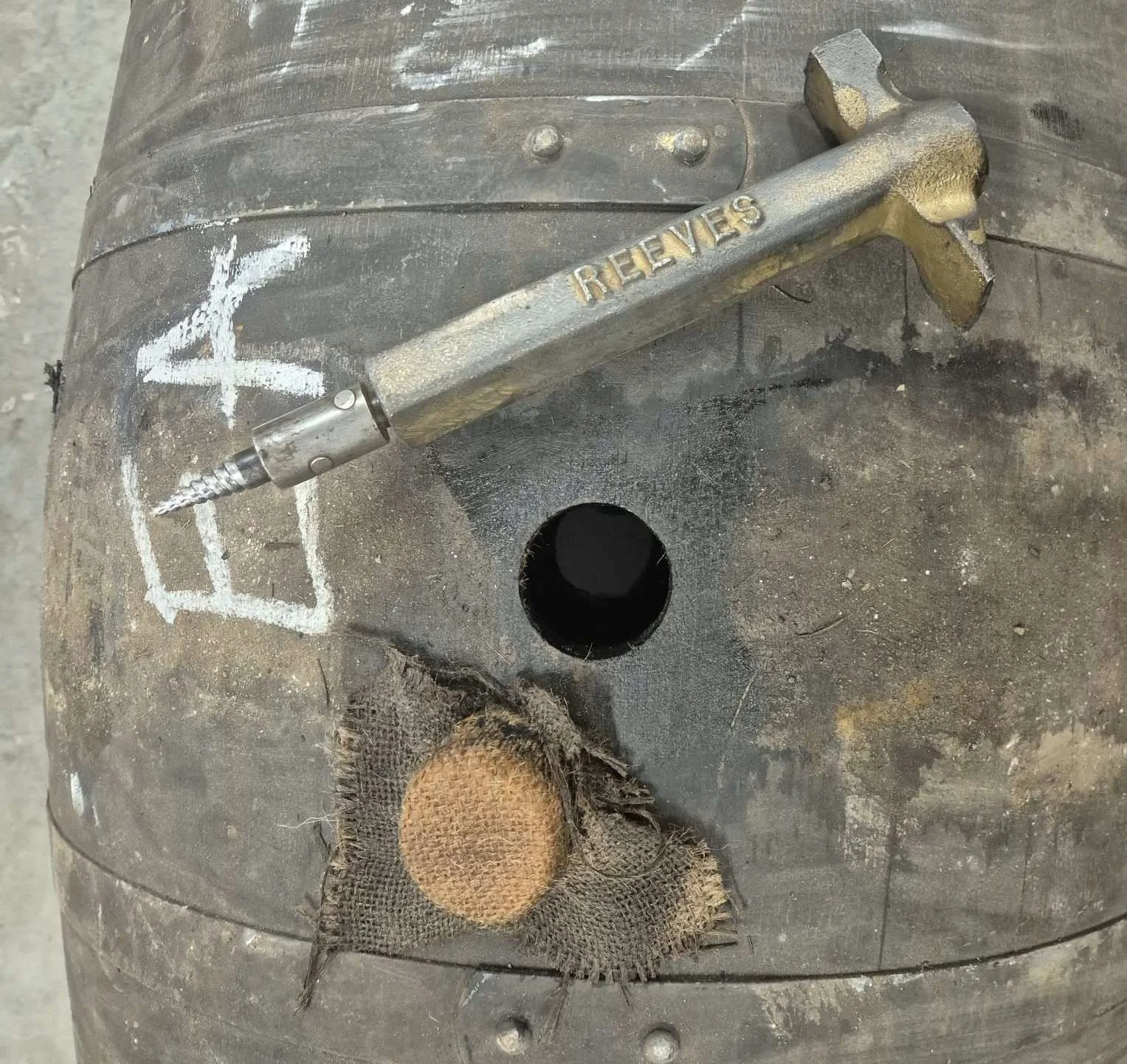
A perk of being indie bottler is we can sniff a bung hole whenever we want.
So that's really what being an indie bottler is.
We don’t distill the whisky ourselves - we have to thank the amazing distilleries for the hard work they do and for working with us.
We buy whisky before we know exactly what it will become. We spend years looking after it, making decisions about how it should mature, deciding which casks are worth pursuing and which ones aren't. We turn that whisky into bottles, get those bottles into the hands of customers and then start the process all over again.
And the best bit? The moments when everything comes together.
Why We Bought a Derelict Warehouse Covered in Pigeon Shit
There are easier ways to build a whisky company.
Buying a derelict warehouse with holes in the roof, broken windows, an asbestos roof, weeds growing through the floor and enough pigeon shit to make you question every decision that led you there probably isn't one of them.
Naturally, that's what we decided to do.
We needed somewhere bigger
As Woodrow's grew, we started looking for bigger premises.
We knew we wanted somewhere that could do more than simply give us additional storage. We wanted somewhere that could become part of what Woodrow's actually is - a place where we could mature whisky, hold hundreds of casks, welcome people in and eventually give visitors a chance to see what happens behind the scenes.
So we spent months looking.
We looked at all sorts of options, including a farm in Balerno and land in East Lothian.
There were plenty of sensible possibilities.
And then, one evening, while I was trying to watch television, Woody interrupted me.
“I think I've found something.”
It was 21 MacDonald Place.
The pigeon shit
We went to have a look.
It was... not good.
There were holes in the roof. The windows were broken. Beer cans and pizza boxes were scattered around. There was police tape. Weeds were growing through the floor.
The roof was asbestos and, unsurprisingly, it leaked.
I remember looking around and saying to Kevin:
“It needs a lot of work.”
Kevin replied:
“The more work needing done, the better it is for me.”
That was Kevin.
And, annoyingly, he had a point.
We could see what it could become.
Not what it was.
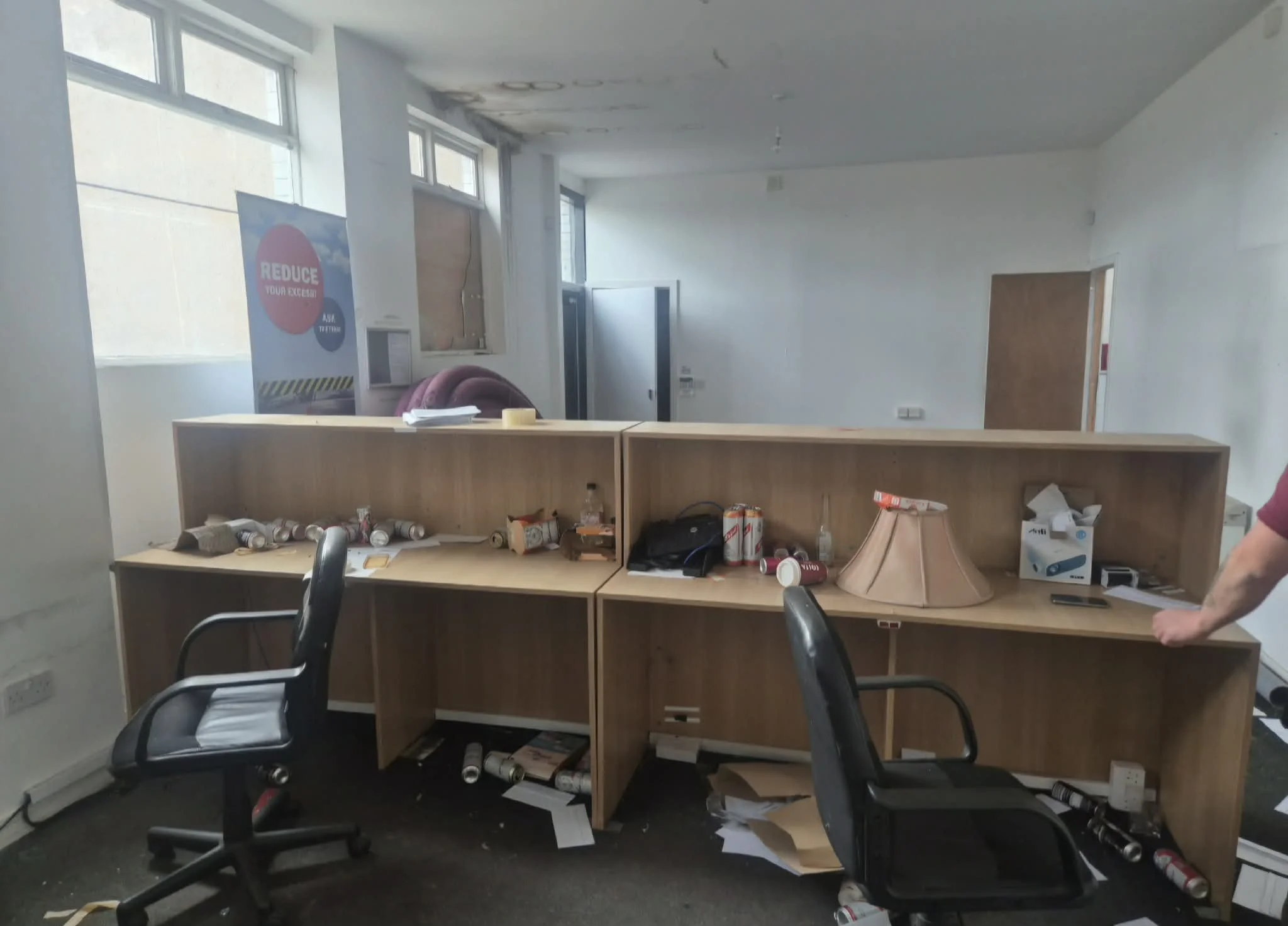
What we walked into and thought ‘yes, let’s buy this’
Then we lost it
We put in a bid. We lost
Housing developers wanted it, and understandably, the numbers probably looked rather different to them than they did to a couple of whisky obsessives looking at a building full of pigeon shit.
So that was that.
We were disappointed and moved on.
Or at least, we thought we had.
“Do you still want it?”
In November, Kevin casually called us.
The developers' plans had fallen through.
The building was available again.
Though Kevin needed to check whether we still wanted it - but, of course we bloody did.
So we took it.
By January, the keys were ours.
And that's when the fun really started.
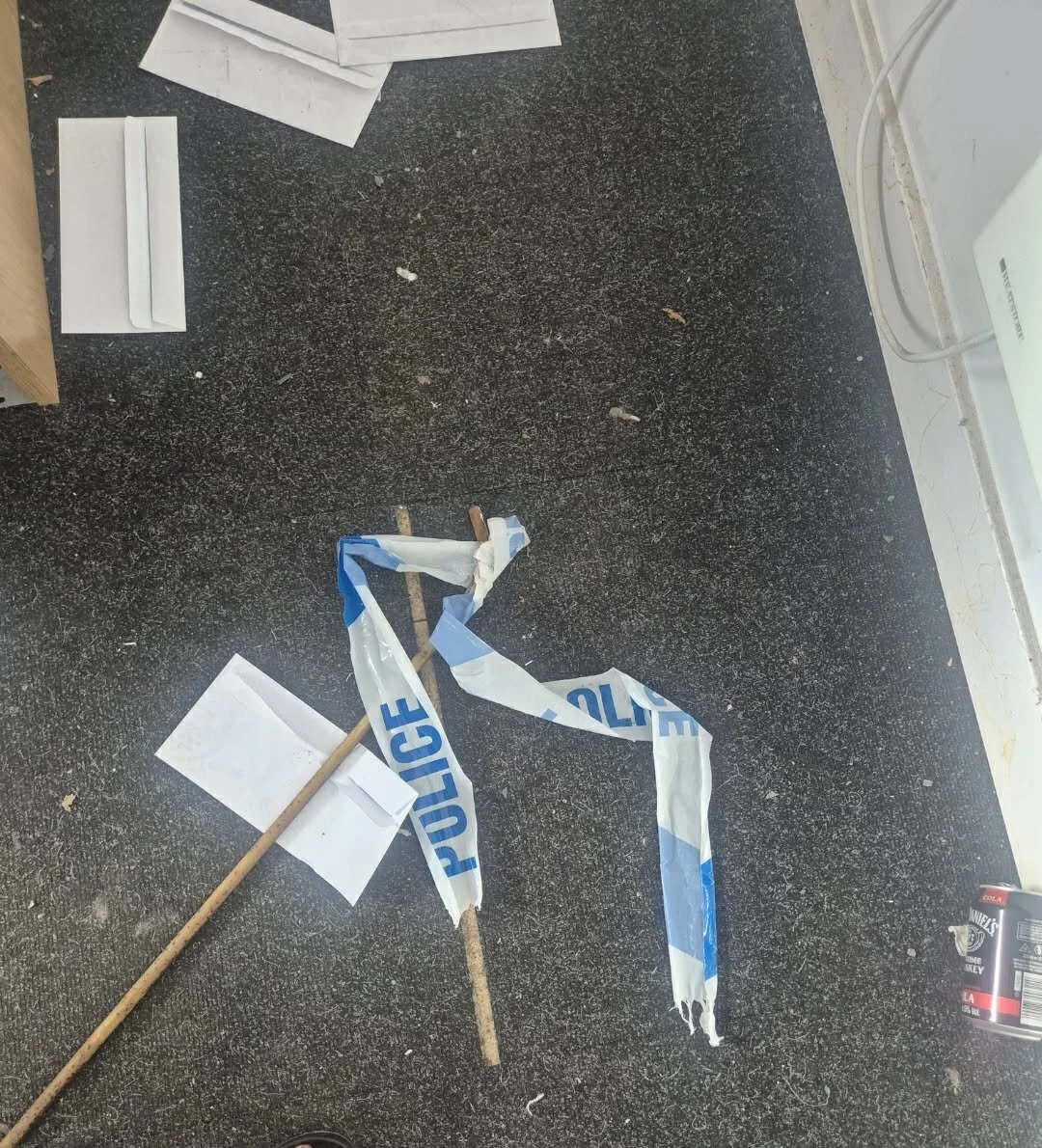
The police tape…. we don’t even want to know
From derelict warehouse to whisky warehouse
The next stage was planning, building work and a big effort trying to turn the place into something that humans could safely occupy.
The roof has been replaced.
The floor has been replaced.
The building is starting to look like the place we'd imagined when we first walked through it.
And, importantly, the pigeons have lost their office.
Why this building?
On paper, there were plenty of buildings that would have been easier.
But finding a 6,500-square-foot building anywhere near Edinburgh city centre that could actually work for what we wanted to do was a very different proposition.
We weren't simply looking for somewhere to store casks.
We needed enough space for hundreds of casks, somewhere we could mature whisky properly, somewhere accessible enough for people to visit, and somewhere with the potential to become a genuine home of Woodrow's.
It did feel like searching for a flying pig.
So when we found 21 MacDonald Place, it sort of felt like a well thought out no-brainer.
We could keep looking for the perfect building for another few years, or we could take the building we'd found and make it what we wanted.
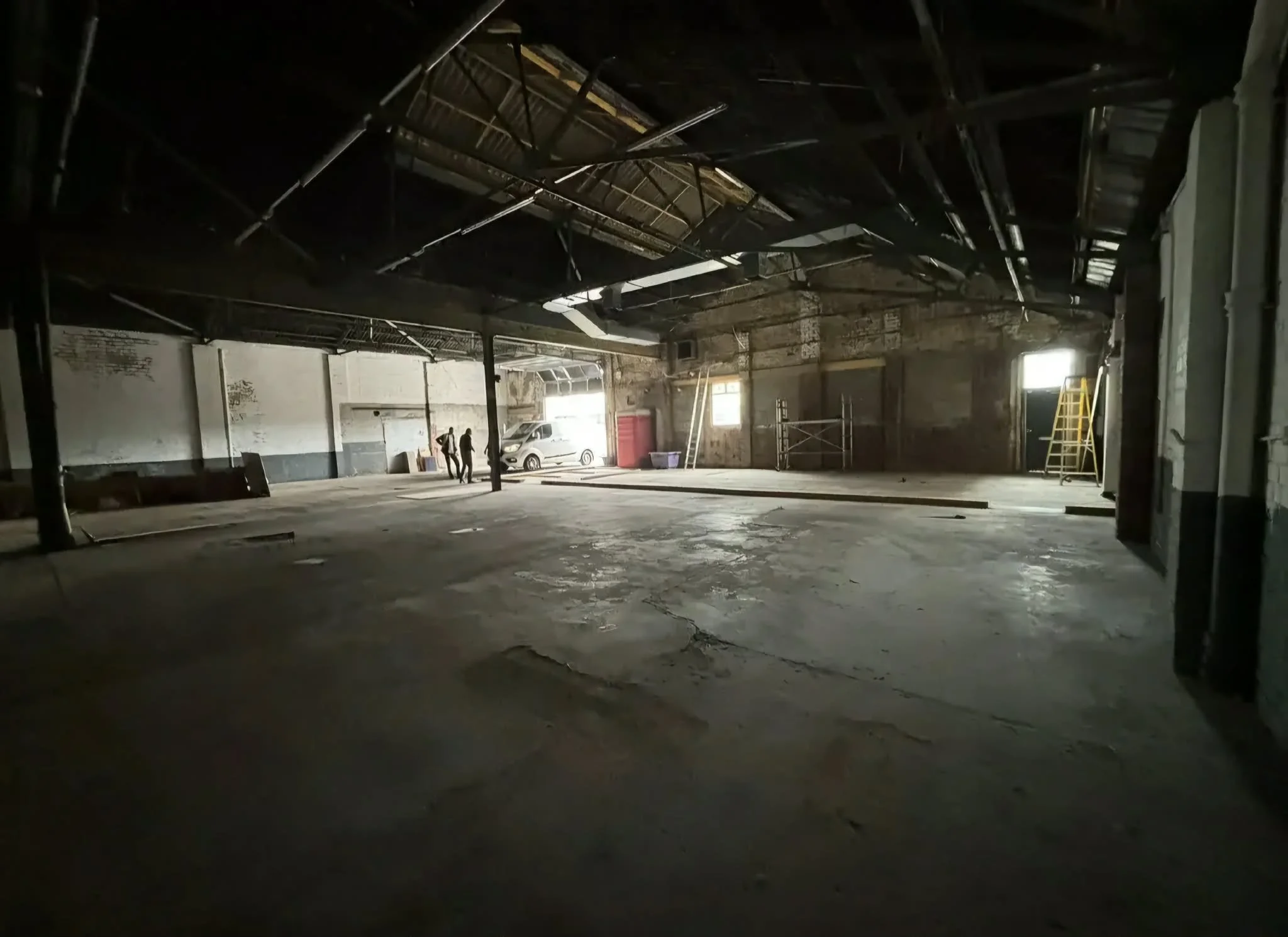
Work in progress, new floor, new roof, no smashed window and a much better smell
What we're building
The plan is for 21 MacDonald Place to become much more than a warehouse.
We'll have the capacity to store hundreds of casks on site, giving us somewhere to mature and manage whisky properly as Woodrow's continues to grow.
But we also want people to experience it.
We're developing a tasting room and a warehouse experience where visitors will be able to come behind the scenes and see what independent whisky bottling actually looks like. Not just the polished bottle at the end.
And occasionally the ones where we look at a cask and say, ‘Naw. That's pish’.
Because that's the bit of whisky-making we love.
———————————————
There were certainly cleaner buildings that didn't require quite so much work, But we didn't just want somewhere to put whisky.
A place where we can keep doing what we've always tried to do: take the whisky seriously, experiment, learn, argue about casks, reject things that aren't good enough, and occasionally do something completely ridiculous.
The warehouse was a mess when we first saw it.
We're rather fond of it now.
And one day soon, instead of pigeons, beer cans and pizza boxes, there will be hundreds of casks of whisky sitting inside.
We'll take that as progress.

Motherlover, What The Love Is This All About?
If you've gotten your hands on a bottle, or perhaps half a dozen, of our Highland Motherlover 9-Year-Old Single Malt Scotch Whisky from the Race to the Bottle Edition range, you might be wondering: What in the world were Woodrow’s thinking? I mean, there’s a tombstone on the label, and here we are, sipping away by the fire (or radiator, depending on your heating setup) during the festive period.
The Reason behind
Well, here it is: we released this whisky as a bit of a protest. We wanted to draw attention to some recent practices from certain more established independent bottler (who shall remain nameless—for now, let’s just call them X).
By the last quarter of 2024, we noticed something troubling, and yet, strangely interesting, in the whisky world: a sudden surge of whiskies hitting the shelves at shockingly good prices. These “amazing deals” were popping up everywhere, to which, we, amongst other smaller independent bottlers cried: How on earth are they making this work?
I know, I know. Some of you are probably thinking, “Well, X is a more established bottler, and they probably bought their stock years ago when prices were lower. That’s how they can afford to offer such low prices.”
But here’s the thing—we did some quick maths in a pub to see what was really going on. (All hail the Back of the Napkin Maths)
The Maths Behind the "Excellent Price"
Let’s take an example from X’s latest release: a 13-year-old Speyside Single Malt at 57.1% ABV, priced at ~£46.00 a bottle:
Price after VAT: Remove the 20% VAT, and we’re down to £38.33.
Retailer’s Margin: Subtract the retailer’s 25% cut, and now we’re at £28.75.
Alcohol Duty: The new alcohol duty of £31.64 per litre of alcohol (from August 2023) means duty is a heafty £12.65 per 700ml, bringing us to £16.10.
Packaging & Bottling Costs: Add in the costs for glass bottles, corks, labels, and bottling (about £5 per bottle), and we’re left with a paltry £11.10.
So, £11.10 is what’s left to cover the whisky itself, X’s overhead, and—well—profit. This raised a big question amongst smaller independent bottlers, including ourselves: How is this even possible?
The "Race to the Bottom" Explained
Of course, X has every right to do what they do and release what they release. We live in a democratic, capitalist society, after all. In fact, this is a fairly common business practice, known as the "Race to the Bottom."
The "Race to the Bottom" refers to the market situations where competitors prioritise market share growth over profitability and keep lowering prices (sometimes to the point of a net loss) to gain enough control over a market and eliminating competitors.
A Whisky Drinker's Confession
I must confess—I’m a whisky drinker first and foremost (shocking, I know…). And like many of you, I do appreciate a good value-for-money bottling, especially in the current economy (I mean, just look at what I drive…).
What I first enter the whisky industry, I’ve realized that the whisky supply chain is surprisingly complicated. It involves producers, brokers, traders, and bottlers. Like many of you, I’ve questioned the model and wondered why so many people seem to be adding margins onto the whisky without doing much in return. I mean, why can’t I just buy stock directly from distillers and bottle the liquid myself? That would price out the competition, right? (Guilty as charged.)
However, over the years, I started to understand that this complicated ecosystem actually sustains the diversity of brands, flavors, and ideas in the whisky world. Each parcel of casks, no matter how big or small, finds its way into the hands of different bottlers, big and small. And that, in turn, gives us all a unique array of expressions and experiences to enjoy. Imagine walking into a specialist whisky retailer and there are only 3 indie brands on the shelves.
Is this Right or Wrong?
So, where do we stand on all of this? Please don’t get me wrong, there’s no right answer. X has every right to do what they do, and as a (smaller) business, we must adapt to the market and release what people want! And, of course, there are also plenty of bottles released in recent years that make us think, “This is ridiculously expensive for what it is... right? They used to be a lot cheaper !!!)
But here’s the thing: we thought it would be interesting to shine a light on this situation and get the conversation started. The goal of this bottling isn’t just to make a statement—it’s to spark discussion among whisky drinkers, bottlers, and even producers. We want to talk about the pricing practices that shape the market and how it affects the whisky you drink.
And let’s not forget the bigger picture. As we roll into 2025, the whisky industry is facing some pretty significant challenges—poor global economic performance, rising energy costs, global instability, shifting consumer behaviour and overproduction risks. But that’s a whole different can of worms to crack open.
So, whether you’re sipping your Highland Motherlover in front of a roaring fire, or just basking in the glow of your very efficient radiator, remember: this bottle might just be the most interesting protest whisky you’ve ever tasted.